Choose flooring and tiling products using documents for the exact product and the requirements of the project. A low-VOC description, a safety data sheet and an environmental certification answer different questions; check which evidence is required before making a specification or environmental claim.
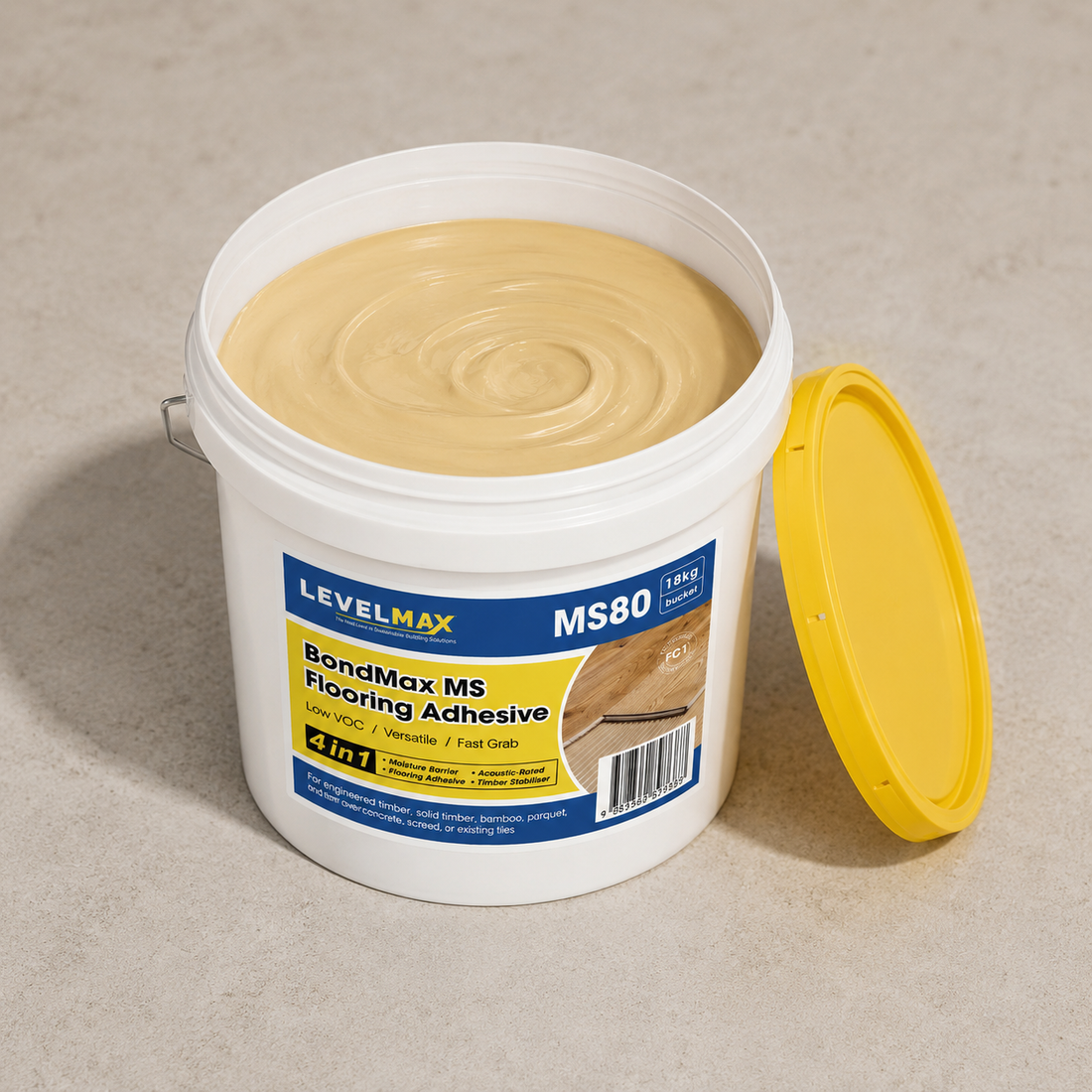
The current LEVELMAX range includes BondMax timber flooring adhesives, ProFlow self-levelling compound, Primer X products and ProBond tile adhesive. Review each product separately. Do not transfer another product’s test results, emissions claims or certifications to the product selected for the job.
1. Check product-specific VOC information
Check whether the document reports VOC content or results from an emissions test, and note the test method, units, product identity and document date. A reported VOC content alone does not establish an indoor-air emissions classification.
What the current documents say
-
BondMax MS40: The June 2026 MS40 TDS reports VOC content of <1g/kg for this product. Use that product-specific value in its stated context; it does not demonstrate an emissions certification for the complete LEVELMAX range.
-
Application conditions: Low VOC does not replace the handling instructions. Read the product’s current SDS and follow the specified ventilation, protective equipment, application and curing requirements.
2. Match environmental evidence to the project
If the project has Green Star, LEED or another environmental assessment requirement, ask the project assessor which product evidence, methods and document versions are accepted. Product selection alone does not confirm a project rating or credit.
Evidence to request before specifying
-
Required evidence: Request any product-specific test report or certification required by the project. Check the exact product, issuer, scope, date and validity with the assessor before relying on it for a credit.
-
Environmental comparisons: Compare products using documented, equivalent quantities and an accepted assessment method. Coverage, local delivery or concentrated packaging alone does not quantify a carbon reduction.
3. Follow the product and site safety instructions
Use the current safety data sheet for the product and the site’s handling procedures before opening, mixing or applying it.
A. Plan powder handling and dust controls
For powder products, follow the SDS instructions for avoiding dust exposure and using the required controls and protective equipment.
B. Check hazards and handling requirements
-
Hazard information: Use the current product SDS for ingredient, hazard and handling information. Request product-specific evidence before making claims about constituent levels or reduced health risks.
-
Manual handling: Plan lifting and movement using the actual pack size and the site’s handling requirements.
4. Confirm the complete flooring system
Product selection should cover substrate preparation, application conditions, floor covering compatibility and the project’s documentation requirements.
-
Occupied spaces: Follow the specified curing, ventilation and access requirements before putting the floor into use.
-
Installers: Check the SDS and the installation instructions, and use the site’s required protective measures.
-
Project documentation: Retain the product documents and the evidence accepted for the project rather than assuming a range-wide environmental benefit.
Choose with current product evidence
Send the product, substrate, floor covering and project documentation requirements to LEVELMAX trade support. Request the applicable TDS, SDS and any available product-specific evidence before confirming suitability.
Select the product, confirm the instructions and keep the evidence with the project records.
Product documents are available through the Technical Centre or on request from LEVELMAX.